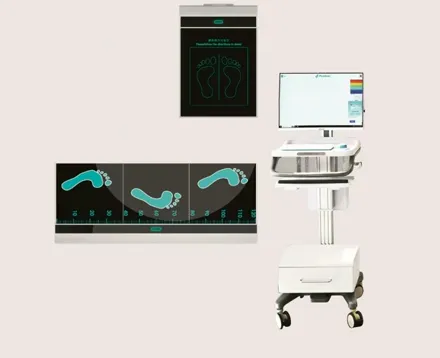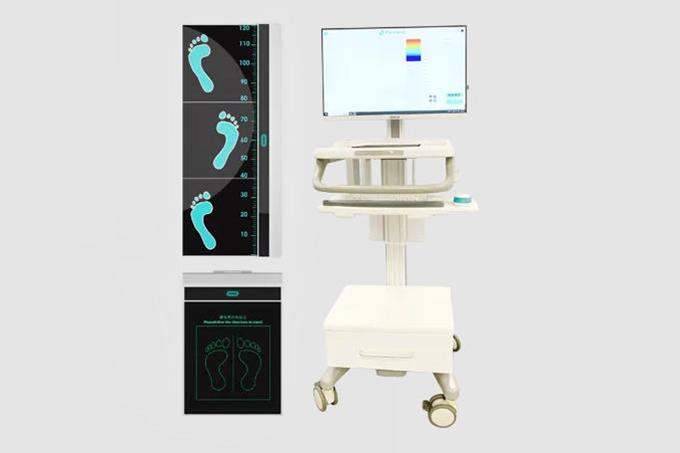
A plantar pressure measurement system provides objective data about how pressure is distributed beneath the feet during standing and movement. For hospitals, rehabilitation centers and specialist clinics, this information can support gait assessment, balance evaluation, rehabilitation monitoring and analysis of abnormal loading patterns.
However, not all plantar pressure measurement devices are designed for the same clinical purpose. Sensor technology, measurement area, sampling frequency, calibration, software metrics and testing workflow can all affect the usefulness of the data.
For clinical buyers, choosing the right system means matching technical specifications to the assessments actually performed rather than simply selecting the device with the largest sensor count.
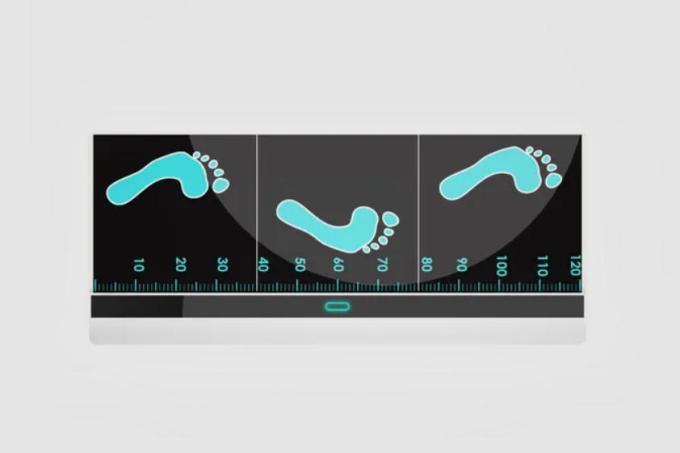
A plantar pressure measurement system is a sensor-based device that records the location and magnitude of pressure between the plantar surface of the foot and a measurement surface.
Most clinical systems use either a floor-mounted pressure platform or sensors integrated into footwear. Platform systems are particularly useful for barefoot standing and walking assessment, while in-shoe systems allow pressure to be recorded inside footwear over multiple steps.
A typical plantar pressure system combines a sensor array, signal-processing hardware and software. The software transforms individual sensor readings into pressure maps and quantitative parameters such as peak pressure, mean pressure, contact area and center-of-pressure movement.
A recent review of pressure-measurement technology notes that platform systems are widely used for clinical assessment of standing and walking, while in-shoe devices can be particularly useful when evaluating footwear, orthoses or movement outside a laboratory setting.
The correct format therefore depends first on what the clinic intends to measure.
Plantar pressure measurement works by repeatedly sampling pressure from multiple sensors and converting those signals into spatial and temporal information about foot-ground interaction.
When a patient steps onto the platform, each plantar pressure sensor records local loading. Combining measurements from the full sensor array creates a pressure map showing how loading is distributed across the heel, midfoot, forefoot and toes.
Dynamic systems also measure how pressure changes over time.
| Measurement | What It Shows | Clinical Relevance |
|---|---|---|
| Peak pressure | Highest local pressure | Detects concentrated loading |
| Mean pressure | Average regional pressure | Supports comparison between areas |
| Contact area | Area touching the platform | Helps assess plantar contact |
| Load distribution | Left/right loading difference | Identifies asymmetry |
| Center of pressure | Progression of resultant loading | Supports balance and gait analysis |
| Contact time | Duration of foot contact | Adds temporal gait information |
Sampling frequency is particularly important during walking because gait events occur much faster than standing changes. For example, a system operating at 800 Hz theoretically samples every 1.25 milliseconds, providing substantially more temporal detail than a low-frequency system.
However, higher specifications alone do not guarantee clinically useful data. Calibration, repeatability and testing protocol remain essential.
Choosing a plantar pressure measurement system requires matching sensor performance, testing mode and software capabilities to the clinic's real workflow.
Hospitals and clinics should consider:
Static or dynamic testing: Static systems focus on balance and standing distribution, while dynamic platforms record walking and gait-related pressure changes.
Measurement area: The platform should provide enough usable space for the intended patient population and testing protocol.
Sampling frequency: Dynamic gait assessment generally requires greater temporal resolution than static standing measurement.
Sensor density: Greater spatial resolution can help identify localized pressure differences, but sensor quality is as important as quantity.
Software output: Reports should provide clinically relevant parameters rather than large volumes of data that staff rarely interpret.
Workflow and repeatability: Setup time, calibration, patient positioning and report generation affect daily clinical usability.
Technical specifications should therefore be considered together rather than individually.
As a practical example, Sighture's dynamic Gaitnovate II specification lists 12,288 sensing points and sampling up to 800 Hz. Those figures are useful not because every clinic necessarily needs those exact numbers, but because they illustrate the type of spatial and temporal performance buyers should examine when comparing dynamic systems.
Sensor accuracy and data quality determine whether plantar pressure measurement results can be meaningfully interpreted and compared over time.
Pressure sensors can behave differently depending on loading rate, temperature, calibration method and repeated use. For this reason, accuracy should not be evaluated only from the nominal sensor specification.
Research comparing commercial pressure systems has found that different devices can produce different values for parameters such as peak pressure and contact area, even when measuring similar movement. A 2025 study reported limited cross-system comparability for several plantar-pressure variables, highlighting the importance of standardized calibration and analysis procedures.
Clinics should therefore pay attention to repeatability. If the same patient repeats the same standardized assessment, the system should produce sufficiently consistent measurements to distinguish genuine clinical change from measurement variation.
Testing protocol also matters. Walking speed, approach distance, footwear and conscious targeting of the pressure plate may all influence results. A reliable plantar pressure measurement program therefore requires both appropriate equipment and consistent operating procedures.
Plantar pressure measurement can support rehabilitation by quantifying changes in loading, balance and gait that may be difficult to judge through visual observation alone.
Common applications include:
Post-injury rehabilitation: monitoring whether an affected limb gradually accepts more load.
Gait rehabilitation: examining left-right asymmetry and pressure progression during walking.
Balance assessment: evaluating weight distribution and center-of-pressure behavior.
Orthotic assessment: comparing loading before and after an insole or footwear intervention.
Foot-risk monitoring: identifying areas exposed to repeatedly elevated plantar pressure.
For example, a patient may appear to walk more symmetrically after several weeks of rehabilitation. Repeated plantar pressure measurement can help determine whether weight distribution and regional loading have actually changed.
The important point is that pressure data should complement, not replace, clinical examination. Pain, range of motion, strength, deformity and medical history cannot be determined from a pressure map alone.
For hospitals and clinics, the most useful system is therefore one that integrates naturally into assessment and follow-up rather than generating technical data that clinicians do not routinely use.
Selecting a plantar pressure measurement system requires more than comparing sensor numbers or product specifications. Hospitals and clinics should evaluate testing mode, sampling frequency, sensor accuracy, calibration, repeatability, software outputs and daily workflow together.
A well-matched plantar pressure system can provide objective information about pressure distribution, asymmetry, balance and gait progression. When combined with standardized protocols and clinical examination, these measurements can support more consistent rehabilitation assessment and longitudinal monitoring.
It measures pressure distribution, contact area, loading symmetry and other foot-ground interaction parameters.
It is a sensing element that converts mechanical pressure beneath the foot into measurable electrical data.
No. Sensor quality, calibration, measurement area, software and repeatability are also important.
The appropriate rate depends on the movement being measured. Dynamic gait generally requires higher sampling rates than static standing assessment.
Platforms suit controlled standing and walking tests, while in-shoe systems are useful for footwear and multiple-step assessment.
No. It provides objective biomechanical data that should be interpreted alongside physical examination and other clinical findings.

 English