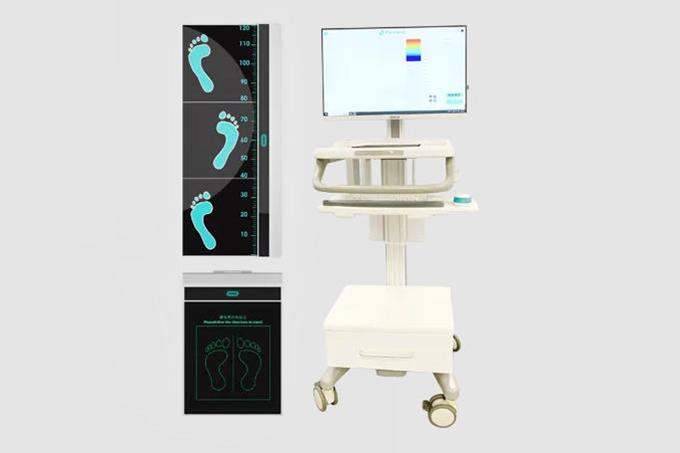
A gait analysis system is a digital assessment solution used to capture, measure, and analyze human walking patterns. Instead of relying only on visual observation, it provides objective movement data that can help clinicians and researchers better understand gait characteristics, functional changes, and rehabilitation progress.
Depending on the configuration, gait analysis may involve pressure sensors, motion capture, cameras, force measurement, or other sensing technologies. The right system should therefore be selected according to the intended assessment, required parameters, testing environment, and clinical or research workflow.
Sighture Medical provides movement and gait assessment solutions designed to support objective data collection in clinical, rehabilitation, and research environments.
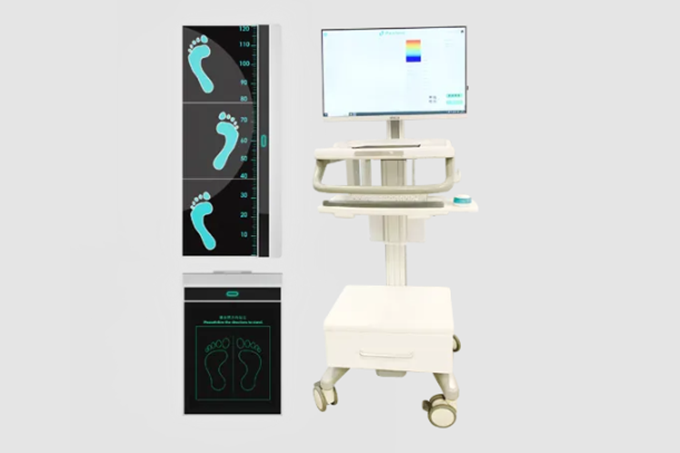
A gait analysis system is a measurement platform that records and analyzes walking-related parameters to provide quantitative information about human movement.
Traditional gait assessment often includes clinical observation of walking speed, symmetry, balance, step pattern, and joint movement. Digital analysis complements this process by recording measurable parameters that can be compared across trials or over time.
Depending on the gait analysis technology used, a system may evaluate temporal-spatial parameters, plantar pressure, movement trajectories, or other biomechanical information.
The resulting data can support professional assessment, but it should be interpreted together with patient history, physical examination, functional testing, and clinical judgment rather than being used as a standalone diagnosis.
Gait analysis systems capture movement through sensors or imaging technologies and convert the recorded signals into measurable gait parameters.
A typical digital assessment involves:
Data capture: Sensors, cameras, pressure platforms, or other measurement devices record information as the subject walks.
Signal processing: Raw measurements are processed and converted into usable movement data.
Gait calculation: Software calculates relevant parameters according to the measurement method.
Visualization and reporting: Results can be presented as graphs, pressure maps, movement patterns, or numerical reports.
Different technologies provide different information. A pressure-based gait analysis device, for example, can reveal how the foot interacts with the ground, while motion-based equipment may provide information about body or joint movement.
The technology should therefore match the clinical or research question being investigated.
A gait analysis system can measure temporal, spatial, pressure-related, and movement parameters depending on its hardware and software configuration.
Common gait parameters include walking speed, cadence, step length, stride length, stance time, swing time, and left-right symmetry. These measurements can help professionals identify differences between limbs and quantify changes between assessment sessions.
| Metric | What It Describes |
|---|---|
| Walking speed | How quickly the subject walks |
| Cadence | Number of steps over a defined time |
| Step length | Distance associated with an individual step |
| Stride length | Distance between successive contacts of the same foot |
| Stance time | Time the foot remains in contact with the ground |
| Swing time | Time the foot is moving forward without ground contact |
More advanced gait analysis equipment may provide additional parameters depending on the sensing technology used. Buyers should confirm exactly which measurements a system can produce before procurement.
Clinical gait analysis provides objective movement information that can support rehabilitation assessment, functional evaluation, treatment planning, and progress monitoring.
Potential applications include:
Rehabilitation assessment: Repeated measurements can help clinicians quantify changes during a rehabilitation program.
Functional gait evaluation: Temporal-spatial and other movement parameters can complement observational assessment.
Balance and mobility assessment: Walking patterns may provide additional information about functional mobility.
Orthotic or intervention evaluation: Measurements can help compare gait characteristics before and after an intervention.
Gait analysis can also be valuable in biomechanics and movement research, where standardized quantitative data make it easier to compare subjects, conditions, or repeated trials.
Its value comes from providing objective evidence alongside professional interpretation rather than replacing clinical expertise.
Choosing a gait analysis system requires matching measurement technology, available metrics, accuracy, software functions, workflow, and support services with the intended application.
Before purchasing, buyers should consider:
Assessment purpose: Determine whether the system will primarily support clinical evaluation, rehabilitation, biomechanics research, or another application.
Required parameters: Confirm which temporal-spatial, pressure, or movement metrics are actually needed.
Measurement environment: Consider available walking space, installation requirements, portability, and testing frequency.
Software functions: Review data visualization, comparison, reporting, storage, and export capabilities.
Repeatability and support: Calibration, training, maintenance, software support, and consistent measurement are important for long-term use.
Rather than choosing a system based on the largest number of features, healthcare organizations should prioritize functions that directly support their assessment workflow.
Sighture Medical provides professional gait and movement assessment solutions designed to support quantitative evaluation in healthcare and research settings.
When discussing a project with Sighture Medical, buyers can define the intended application, testing environment, required measurements, expected workflow, and software requirements. This makes it easier to evaluate whether a proposed configuration fits actual assessment needs.
For organizations building broader movement-analysis capabilities, hardware, software, data interpretation, and daily usability should be considered as an integrated system rather than as separate purchasing decisions.
A gait analysis system converts human walking patterns into measurable data that can complement visual observation and professional clinical assessment. Parameters such as walking speed, cadence, step length, stride length, stance time, and symmetry can provide a clearer basis for comparing movement between sessions.
Different gait analysis technology captures different aspects of movement, so buyers should select equipment according to the required measurements rather than specifications alone. Sighture Medical supports professional users seeking digital gait and movement assessment solutions for clinical, rehabilitation, and research applications.
It is a digital measurement system that captures and analyzes walking-related data to provide quantitative information about gait.
Depending on the equipment, measurements may include walking speed, cadence, step length, stride length, stance time, swing time, symmetry, and pressure-related parameters.
Systems may use pressure sensors, cameras, motion sensors, force measurement technologies, or combinations of different technologies.
Yes. Repeated measurements can help professionals objectively compare gait characteristics and functional changes during rehabilitation.
The system provides measurement data that can support professional assessment, but the data should not be treated as a standalone medical diagnosis.
Consider the intended application, required metrics, measurement technology, repeatability, software, testing environment, reporting functions, training, and technical support.

 English