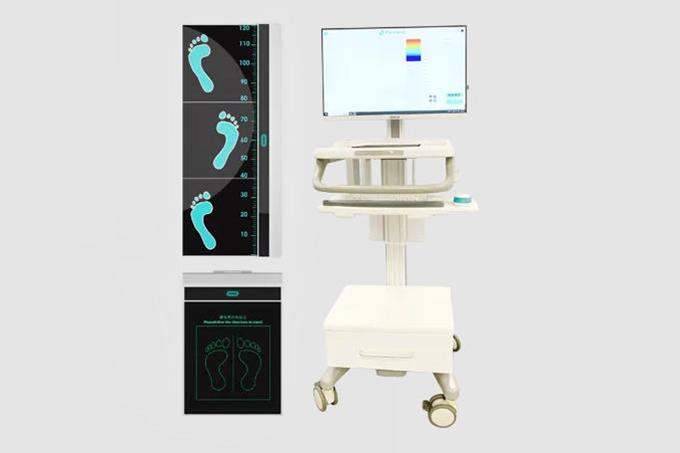
Choosing the right gait analysis equipment can help rehabilitation centers move from subjective movement observation toward more objective, data-supported assessment. Depending on the technology used, gait equipment can measure parameters such as walking speed, cadence, step length, stance time, symmetry, plantar pressure, and other movement characteristics.
However, purchasing decisions should not be based simply on the number of sensors or functions listed in a specification sheet. Rehabilitation centers need to consider clinical objectives, measurement capability, patient workflow, software, installation requirements, training, and long-term operating costs.
Sighture Medical provides gait and movement assessment solutions for rehabilitation, clinical, and research environments, helping professional users select equipment according to practical assessment requirements.
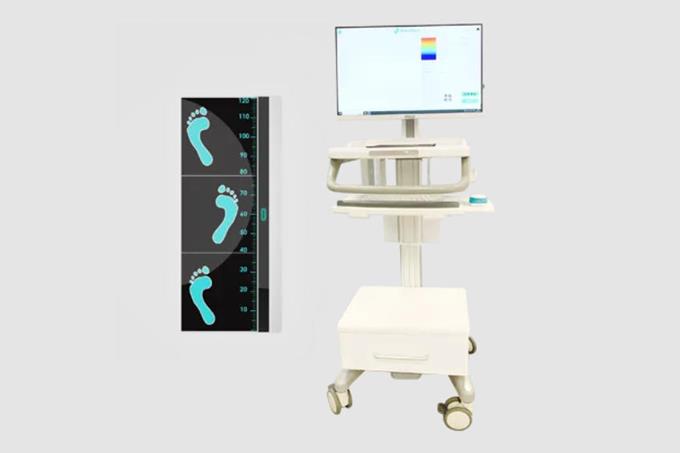
Gait analysis equipment refers to measurement hardware and software used to capture, quantify, and analyze human walking patterns for clinical, rehabilitation, or research purposes.
A professional system converts movement into measurable data that clinicians can use alongside physical examination and visual observation. Depending on the equipment configuration, measurements may include temporal-spatial parameters, plantar pressure distribution, balance characteristics, or body movement.
A complete gait analysis system normally combines sensing technology with software for data processing, visualization, comparison, and reporting. The exact capabilities vary considerably between systems, making it important to define the required clinical functions before comparing products.
Gait analysis equipment can use pressure sensing, optical motion capture, wearable sensors, force measurement, or combinations of these technologies.
Common equipment categories include:
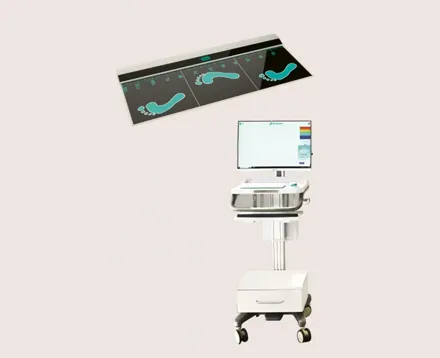
Pressure platforms and walkways: Measure plantar pressure distribution and foot-ground interaction during standing or walking.
Optical motion systems: Use cameras and tracking technologies to analyze body or joint movement.
Wearable sensors: Sensors attached to the body can collect movement information during gait assessments.
Force measurement systems: Measure forces generated during contact with the ground.
Each gait analysis device answers different assessment questions. A pressure platform may be suitable when plantar loading is the primary concern, while a more comprehensive motion system may be required when detailed body movement is important.
Rehabilitation centers should therefore choose technology according to the measurements clinicians actually need rather than purchasing the most complex system available.
The most important features of gait analysis equipment are measurement capability, repeatability, software usability, clinical workflow, and technical support.
Before purchasing, rehabilitation centers should evaluate:
Required metrics: Confirm whether the equipment measures walking speed, cadence, step and stride length, stance and swing time, symmetry, plantar pressure, or other required parameters.
Measurement performance: Review sampling capability, sensing area, measurement range, repeatability, and other relevant technical specifications.
Software functions: Look for clear visualization, trial comparison, patient records, reporting, and appropriate data-export capabilities.
Ease of operation: Routine assessments should be practical for clinicians and patients without unnecessary setup complexity.
Technical support: Training, calibration, maintenance, software updates, and after-sales assistance should be considered before procurement.
More features do not automatically mean better clinical value. Equipment that fits the rehabilitation workflow and consistently produces useful measurements may offer greater practical value than an unnecessarily complicated platform.
Gait analysis equipment supports rehabilitation by providing quantitative movement data that can be compared across assessments and used to document functional changes.
One important application is baseline assessment. Objective gait parameters can complement clinical observation when documenting a patient's walking characteristics at the beginning of a rehabilitation program.
Repeated testing can then help clinicians compare movement patterns over time. Changes in walking speed, step characteristics, symmetry, or pressure distribution may provide additional information when evaluating rehabilitation progress.
The equipment may also support assessment before and after an intervention, such as changes in rehabilitation strategy or orthotic management. Depending on the system, pressure and gait data can help professionals understand how movement characteristics differ between testing conditions.
As with other rehabilitation equipment, measurement results should support professional judgment rather than replace it.
The total cost of gait analysis equipment depends on sensing technology, measurement capabilities, software, installation, training, maintenance, and system configuration.
Entry-level systems designed for focused measurements can differ significantly in cost from multi-component platforms that combine several movement-analysis technologies. Buyers should therefore compare total ownership requirements instead of focusing only on the initial equipment price.
Software licensing is an important consideration. Rehabilitation centers should confirm whether reporting, data export, upgrades, or additional user access involve separate costs.
Installation and facility requirements can also affect the budget. Some systems require dedicated testing areas, while more compact equipment may fit existing clinical spaces.
Long-term expenses may include calibration, technical support, replacement components, software updates, and staff training. These factors should be clarified before comparing supplier quotations.
Sighture Medical provides gait and movement analysis solutions for professional rehabilitation, clinical, and research applications.
When requesting a solution, rehabilitation centers should provide information about intended assessments, required gait parameters, available testing space, patient workflow, software needs, and expected usage frequency.
This allows the proposed configuration to be evaluated against practical clinical requirements. Sighture Medical supports professional users seeking to integrate objective gait and movement assessment into rehabilitation workflows.
Selecting gait analysis equipment requires balancing measurement capability with clinical usability and total ownership cost. Pressure measurement, motion capture, wearable sensing, and force measurement technologies provide different types of information, so there is no single configuration suitable for every rehabilitation center.
Before purchasing, buyers should define the required measurements, patient workflow, software functions, available space, training requirements, and long-term support needs. Sighture Medical provides gait analysis solutions for rehabilitation and professional assessment environments where reliable movement data are required.
Depending on the system, it may measure walking speed, cadence, step length, stride length, stance time, swing time, symmetry, plantar pressure, and other movement parameters.
Common technologies include pressure platforms, sensor walkways, optical motion systems, wearable sensors, and force measurement equipment.
Yes. It can provide objective movement data for baseline assessment, progress comparison, and evaluation of rehabilitation interventions.
Cost varies according to measurement technology, hardware configuration, software, installation, training, and ongoing support.
Consider required metrics, measurement performance, workflow, software, available space, reporting, training, maintenance, and technical support.
No. Gait measurements provide objective data that should complement clinical examination and professional judgment.

 English