For decades, eye care professionals relied on standard fundus cameras to document the retina. These devices capture a narrow 30° to 50° field of view—enough to inspect the macula and optic disc, but little else. It was like trying to understand a city by peering through a keyhole.
The problem? A lot of pathology develops out toward the edges. Diabetic retinopathy doesn't always announce itself in the center of the frame. Peripheral tears, choroidal masses, retinal vasculitis—these often brew quietly in the zones a conventional camera can't reach.
This is where the wide angle fundus camera entered the picture, and it hasn't stopped gaining traction since.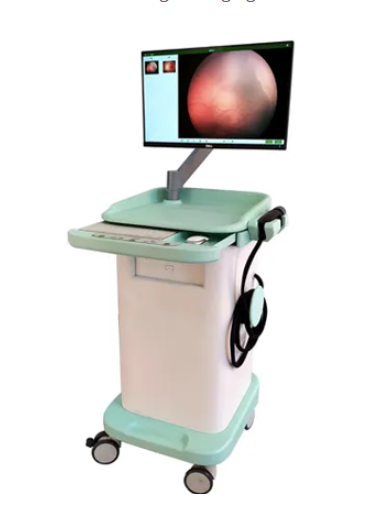
A standard fundus photo gives you a detailed but limited window. A wide angle fundus camera, by contrast, captures a substantially broader retinal surface in a single exposure—typically 90° to over 130°.
Some systems push even further. Ultra-widefield tabletop cameras now reach 200°, covering roughly 80% of the total retinal surface area. That shift in perspective changes what clinicians can see, what they can document, and—most critically—what they can catch early.
Here's a quick comparison of how imaging capabilities scale across the three common categories:
| Camera Type | Typical Single-Shot Field of View | Retinal Coverage | Common Applications |
|---|---|---|---|
| Standard Fundus Camera | 30°–50° | Posterior pole only (macula, optic disc) | Basic documentation, optic nerve assessment |
| Wide Angle Fundus Camera | 90°–133° | Central + peripheral retina | DR screening, AMD monitoring, general diagnostics |
| Ultra-Widefield Camera | Up to 200° | ~80% of retinal surface | Comprehensive screening, ROP, peripheral lesion mapping |
There's a simple principle here: the wider your view, the more pathology you can detect in a single capture. A conventional camera might show a healthy-looking macula. A wide angle fundus camera, however, can pull back the curtain on what's happening at the periphery—microaneurysms, hemorrhages, lattice degeneration, or atrophic holes that would otherwise go unnoticed until symptoms appear.
Take diabetic retinopathy screening as an example. Multiple comparative studies have shown that widefield imaging increases the detection rate of referable cases compared to standard handheld or narrow-field approaches. One study noted that ultra-widefield cameras could visualize up to 3.2 times more retinal surface than traditional 7-standard-field photography.
This matters enormously for real-world clinical workflows. Screening programs in endocrinology clinics, primary care settings, and community outreach initiatives depend on getting a reliable view in one or two captures—not a laborious montage stitched together from a dozen narrow-field shots.
Perhaps nowhere is wide angle imaging more impactful than in neonatal and pediatric care. Retinopathy of prematurity (ROP) remains a leading cause of preventable childhood blindness worldwide. Detecting it requires a thorough examination of the developing retina—something conventional cameras simply cannot deliver.
Widefield fundus photography has become essential for ROP detection, documentation, and management. Telemedicine programs built around wide angle fundus cameras now allow trained technicians in NICUs to capture images that remote specialists can grade, dramatically expanding access to expert screening in underserved regions.
The numbers are striking: roughly one in five preterm babies may develop some form of ROP. Without adequate imaging tools, many of these cases would be missed until irreversible damage sets in.
When evaluating a wide angle fundus camera for their practice, clinicians tend to focus on several key performance factors:
True Color Accuracy: Systems with TrueColor or comparable technology deliver images that reflect what ophthalmologists actually see during clinical examination—critical for detecting subtle tissue changes.
Non-Mydriatic Capability: The ability to image through undilated pupils speeds up workflow, reduces patient discomfort, and makes screening more accessible for patients with limited time.
Image Resolution and Clarity: Higher resolution allows for more confident identification of small lesions—microaneurysms, early hemorrhages, subtle vascular abnormalities.
Ease of Use and Automation: Auto-focus, auto-exposure, and eye micro-movement compensation reduce operator dependency and ensure consistent image quality across different users.
Integration Potential: The ability to connect with telemedicine platforms, EMR systems, and AI-assisted screening tools extends the clinical value of the device beyond image capture alone.
Not every practice has the space or budget for a dedicated imaging suite. That's why handheld and portable wide angle fundus cameras have carved out a significant role in modern eye care. These devices bring diagnostic-grade imaging to mobile clinics, bedside exams, community health fairs, and rural outreach programs where a traditional tabletop system would be impractical.
Handheld fundus cameras with widefield optics have demonstrated strong agreement with tabletop ultra-widefield systems in grading diabetic retinopathy, though UWF systems still offer an edge in detecting peripheral pathology. The trade-off between portability and field-of-view breadth is one each practice must weigh based on its patient population and clinical priorities.
The shift toward wide angle fundus cameras isn't happening in a vacuum. It's being driven by several converging trends:
Earlier Detection Demands: Chronic conditions like diabetes are rising globally, and with them, the need for routine retinal screening that catches pathology before vision is threatened.
Telemedicine Growth: Remote interpretation requires high-quality, wide-coverage images that give remote specialists enough information to make confident clinical decisions.
Patient Expectations: Patients increasingly expect efficient, single-visit diagnostics. Dilating drops, long wait times, and repeat appointments create friction that wide angle non-mydriatic imaging can reduce.
AI Integration: Artificial intelligence-based screening tools perform best when fed high-resolution images with broad retinal coverage, creating a natural synergy with wide angle systems.
The wide angle fundus camera represents more than an incremental improvement over traditional fundus photography. It's a fundamental shift in how clinicians approach retinal assessment—from a narrow, macula-centric view to a broader, more comprehensive perspective that aligns with how retinal disease actually presents.
For ophthalmology departments, endocrinology clinics, pediatric units, and screening programs, investing in wide angle imaging capability means investing in the ability to see more, detect earlier, and document more thoroughly. In a field where early intervention determines visual outcomes, that wider view can make all the difference.
1. What exactly qualifies as a "wide angle" fundus camera compared to a standard one?
Standard fundus cameras typically capture a 30° to 50° field of view centered on the posterior pole. A wide angle fundus camera captures significantly more—generally 90° to 133° in a single shot—allowing visualization of both the central and peripheral retina in one image. Ultra-widefield systems can reach up to 200°, covering roughly 80% of the total retinal surface.
2. Do wide angle fundus cameras require pupil dilation?
Many modern wide angle fundus cameras support non-mydriatic operation, meaning they can capture diagnostic-quality images without pharmacological dilation. This is especially valuable for high-volume screening settings and patients who cannot tolerate dilation drops. However, dilation may still be recommended in certain cases—such as when imaging through media opacities or when maximum peripheral detail is clinically necessary.
3. Can a wide angle fundus camera replace traditional ophthalmoscopy?
Wide angle fundus imaging complements ophthalmoscopy rather than replacing it entirely. It excels at documentation, screening, and enabling remote specialist review through telemedicine. However, a comprehensive eye exam still involves slit-lamp biomicroscopy, intraocular pressure measurement, and other assessments that imaging alone cannot replace. Think of it as a powerful addition to the diagnostic toolkit rather than a wholesale substitute.
4. What retinal conditions benefit most from wide angle imaging?
Conditions with significant peripheral involvement benefit most: diabetic retinopathy, retinal vein occlusions, retinal tears and detachments, retinopathy of prematurity (ROP), choroidal masses, retinal vasculitis, and hereditary retinal degenerations. Wide angle imaging also improves longitudinal monitoring of conditions like age-related macular degeneration by providing consistent, wide-coverage documentation across follow-up visits.
5. Is a handheld wide angle fundus camera as effective as a tabletop system?
Handheld wide angle fundus cameras have shown strong diagnostic agreement with tabletop ultra-widefield systems for many applications, including diabetic retinopathy grading. However, tabletop UWF systems typically offer broader fields of view and higher resolution, which can translate to better detection of subtle peripheral lesions. The choice between handheld and tabletop often comes down to practice setting: handheld systems provide superior portability for mobile and bedside use, while tabletop systems deliver the most comprehensive single-shot coverage for fixed clinical environments.
 Looking for a Reliable Disposable Hysteroscope Manufacturer? Discover Sighture’s Advanced Solution

 English