Imagine a clinician watching a patient walk across a sensor platform. On a nearby screen, a color-coded map of the foot flashes to life—red zones marking dangerous pressure hotspots that, left untreated, might one day become open wounds. This is the quiet reality of plantar pressure mapping, a technology that has moved from research labs into everyday clinical practice.
What once required subjective observation now comes with hard numbers. Through advanced plantar pressure measurement devices, clinicians can capture detailed metrics such as pressure distribution, gait symmetry, and peak force timing—providing a precise language to describe problems they could previously only guess at. For anyone managing diabetic foot complications, overseeing athletic rehabilitation, or fitting custom orthoses, plantar pressure mapping has become something close to indispensable.
This article looks at where the technology matters most, what the evidence says, and how to make sense of the numbers on the screen.
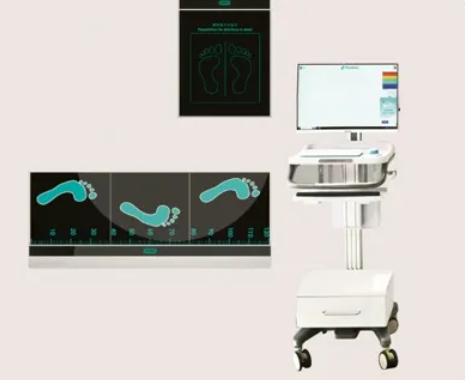
Feet are compact engineering marvels—26 bones, 33 joints, and layers of soft tissue working together to absorb impact and propel the body forward. During walking, the foot transmits forces equivalent to roughly one and a half times body weight with every step. When that load concentrates in the wrong places, tissue breaks down over time.
The tricky part is that pressure problems are rarely visible from the outside. A patient may have a subtle gait asymmetry. An athlete might compensate for a mild injury in ways that shift stress upward into the knee or hip. A person with diabetic neuropathy might feel nothing at all while a pre-ulcerative lesion slowly forms beneath a callus. This is what plantar pressure mapping addresses. By capturing the magnitude, timing, and location of force across the plantar surface—either statically or during dynamic movement—the technology turns what is invisible into something measurable and actionable.
Diabetes currently affects approximately 536.6 million people worldwide, a number projected to reach 642.7 million by 2030. For many of these individuals, the foot is the first place serious complications appear. Diabetic peripheral neuropathy strips away protective sensation, while elevated plantar pressures concentrate mechanical stress on tissues that can no longer feel the damage accumulating beneath them.
A 12-month prospective study of 60 high-risk diabetic participants found that 37% developed a plantar forefoot ulcer during follow-up. The presence of pre-ulcerative lesions—abundant callus, hemorrhage, blister, or fissure—was a powerful predictor, with an odds ratio of 9.97. Simply put, what the eye can see on the skin surface often signals what is happening mechanically underneath. This is where pressure mapping earns its place. A dynamic in-shoe system can identify regions exceeding 200 kPa—a threshold commonly flagged for tissue damage risk—allowing clinicians to design targeted offloading strategies before ulceration occurs. Modern pneumatic insole systems have demonstrated up to 42% peak pressure reduction under test conditions, while specialized footwear can reduce plantar pressure by 51% compared to regular shoes.
Observational gait analysis has its limits. Even experienced clinicians can miss subtle asymmetries in loading patterns, particularly when compensations develop gradually over weeks or months. Plantar pressure mapping adds objective data to the assessment: stride length, stance duration, center of pressure trajectory, and force-time integrals across specific foot regions.
A 2025 cross-sectional study of 113 healthy young adults using baropodometric assessment established that women tend to show greater inter-limb pressure asymmetries than men, and that peak pressures are influenced more by individual biomechanical factors than by body weight alone. These kinds of reference values matter—they give clinicians a baseline against which to measure dysfunction and track recovery. For post-surgical patients, the technology provides concrete evidence of progress. A measured improvement in step length symmetry or a reduction in forefoot peak pressure gives both clinician and patient something to work toward.
Athletes are masters of compensation. A mild ankle sprain that still aches slightly, a tight hip flexor that shortens stride on one side—the body finds a way to keep moving, often by shifting load to structures not designed to handle it. Over weeks and months, those compensations write themselves into tissues as stress reactions, tendinopathies, and eventually frank injuries.
Plantar pressure mapping gives sports medicine practitioners a window into these hidden loading patterns. By analyzing foot strike characteristics, pressure distribution symmetry, and timing parameters during sport-specific movements, clinicians can flag asymmetries before they become injuries and verify that rehabilitation protocols are actually restoring normal mechanics—not just reducing pain.
Raw pressure data can be overwhelming. A single gait cycle generates hundreds of data points across multiple foot regions. The value lies in knowing which metrics to prioritize and how different measurement conditions affect the numbers.
| Measurement Context | Typical Peak Pressures (Forefoot) | Clinical Relevance |
|---|---|---|
| Healthy adults, barefoot walking | 344–410 kPa (hallux region) | Baseline reference values for normal plantar loading |
| Diabetic patients, barefoot walking | Highly variable; >450 kPa in localized regions of high-risk feet | Barefoot data may overestimate in-shoe high-pressure regions |
| Diabetic patients, in-shoe | Generally lower than barefoot; >200 kPa flagged for offloading | More clinically relevant for footwear prescription |
| Post-offloading intervention (pneumatic insole) | Up to 42% reduction from baseline | Validates that the intervention is mechanically effective |
Sources: STAMPS healthy-population study; in-shoe vs. barefoot comparison study; pneumatic insole evaluation.
One research insight worth noting: barefoot pressure maps often identify additional high-pressure regions that do not appear in in-shoe data. Relying solely on barefoot measurements for insole design may overestimate risk in certain zones while underestimating it in others. Whenever possible, pressure-informed orthotic decisions should be based on the condition—barefoot or shod—that best reflects the patient‘s daily reality.
The choice between a pressure platform and an in-shoe system isn’t about which is “better.” It is about what question you are trying to answer.
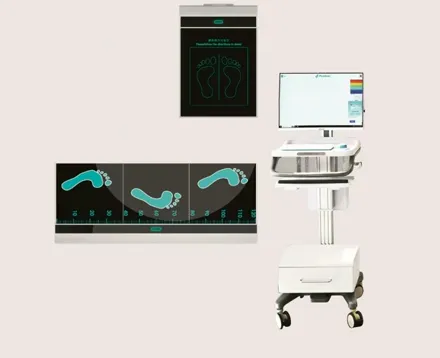
A comparison study of two commercial devices found that pressure platforms generally provide more uniform contact area measurement, making them well suited for posture assessment and static balance analysis. In-shoe systems excel at detecting localized peak pressure points during dynamic movement, which is critical for footwear design and ulcer prevention. Platform systems like those in the Gaitnovate series offer the advantage of repeatable, standardized measurement conditions—a patient steps onto the same surface every time. In-shoe systems capture data during natural walking, which may better reflect real-world loading. Many clinics now use both: the platform for initial assessment and progress tracking, the in-shoe system for footwear optimization and patient education.
Not all pressure mapping systems are created equal. Several factors separate a research-grade measurement from a number that looks precise but is not reproducible. Sensor calibration matters enormously. A system that drifts over time or varies with temperature will produce data that cannot be compared across sessions, undermining the whole point of objective measurement. Sampling frequency also counts—dynamic events like heel strike happen fast, and a system that captures data at 800 Hz will resolve transient peaks that a slower sensor simply misses.
Equally important is the quality management framework behind the hardware. ISO 13485 certification, which Sighture‘s plantar pressure mapping systems operate under, provides assurance that manufacturing, calibration, and traceability processes meet medical device standards. In a clinical context where treatment decisions ride on the numbers, that kind of rigor is not optional.
Plantar pressure mapping has matured into a practical clinical tool. The technology will not replace clinical judgment—no sensor array can substitute for a thorough history and physical examination. But it adds a quantitative dimension to assessment that was previously unavailable.
For the diabetic foot clinic, it means catching tissue at risk before it breaks down. For the rehabilitation practice, it means tracking progress with numbers instead of impressions. For the sports medicine team, it means seeing compensations before they become injuries. In each case, the principle is the same: measure what matters, and let the data guide the decision.
Q: What is the difference between static and dynamic plantar pressure mapping?
Static measurement captures pressure distribution while the patient stands still—useful for posture and balance assessment. Dynamic measurement records pressure during walking or running, revealing loading patterns that only appear during movement. Most comprehensive clinical assessments use both modes.
Q: Can plantar pressure mapping predict diabetic foot ulcers?
Pressure data alone cannot predict ulcers with certainty. However, research shows that identifying pre-ulcerative lesions (callus, blister, hemorrhage) combined with pressure mapping significantly improves risk assessment. Pre-ulcerative lesions at baseline carried an odds ratio of 9.97 for future ulceration in one 12-month prospective study.
Q: How often should plantar pressure be reassessed?
For diabetic patients at high risk, reassessment every 3 to 6 months is common practice—more frequently if footwear changes or foot structure changes are noted. Post-surgical patients typically undergo assessment at key rehabilitation milestones to track objective progress.
Q: Are in-shoe sensors as accurate as pressure platforms?
Both can be accurate when properly calibrated, but they serve different purposes. Platforms offer standardized, repeatable conditions ideal for longitudinal tracking. In-shoe sensors capture real-world loading during natural gait, which may better reflect daily pressures. One 2025 comparison study found the two approaches complement each other rather than competing.
Q: What peak pressure threshold indicates elevated risk for tissue damage?
While there is no single universal threshold, pressures exceeding 200 kPa in-shoe are commonly referenced as a marker for elevated tissue stress in at-risk diabetic feet. Clinical decisions should always incorporate individual patient factors—skin integrity, neuropathy status, and activity level—rather than relying on pressure thresholds in isolation.
 Looking for a Reliable Disposable Hysteroscope Manufacturer? Discover Sighture’s Advanced Solution

 English