Adding a wide angle fundus camera to your practice isn't a decision anyone should rush. These devices don't sit on the same pricing tier as a standard desktop ophthalmoscope. They represent a meaningful capital investment, and the market in 2025 offers more options than ever—from handheld portable units to full-scale ultra-widefield tabletop systems.
A lot of clinic managers find themselves staring at spec sheets full of numbers: megapixel counts, field-of-view degrees, confocal optics, autofluorescence modules. Some of those numbers matter a great deal. Others look impressive on paper but translate into marginal real-world differences once the device is installed and handling daily patient volume.
This article walks through the key decisions, trade-offs, and practical realities of selecting a wide angle fundus camera for a clinical setting—whether that's a busy retinal practice, a community screening program, or a multi-specialty eye center planning to expand its imaging capabilities.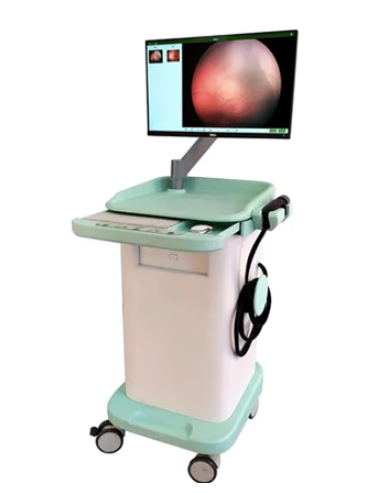
Before comparing features, it helps to get brutally specific about primary use cases:
Is this primarily a diabetic retinopathy screening tool for endocrinology referrals?
Will it serve a comprehensive ophthalmology practice with diverse pathology?
Is pediatric imaging—including ROP screening—on the table?
Do you plan to integrate the images into an AI-assisted diagnostic pipeline?
Is portability a hard requirement, or will the device live in a dedicated imaging suite?
Each of these scenarios places different demands on the hardware.
The wide angle fundus camera landscape splits into roughly three tiers. These categories are useful because they align with clinical needs and budget ranges in ways that make initial triage faster.
| Category | Typical FOV | Resolution | Primary Use Cases | Approximate Price Range (USD) |
|---|---|---|---|---|
| Handheld/Portable Wide Angle | 40°–60° | 5–12 MP | Mobile screening, bedside exams, rural outreach | 8,000-25,000 |
| Tabletop Wide Angle | 45°–133° | 12–24 MP | Comprehensive retinal practice, DR screening | 25,000-60,000 |
| Ultra-Widefield Tabletop | 150°–267° (auto-montage) | 18–24+ MP | Retina subspecialty, ROP, ocular oncology | 60,000-120,000+ |
Modern portable fundus cameras have come a long way. They now offer widefield optics in packages light enough for community screening vans and rural clinics. Handheld cameras are fueling the growth of telemedicine and mobile outreach programs—particularly in regions where patients face travel barriers to specialist care.
The trade-off is straightforward: field of view. Most portable systems cap out around 50°–60° per capture, narrower than what a full-size tabletop camera provides. For diabetic retinopathy screening, this may be sufficient. For mapping peripheral lesions or managing complex retinal detachments, it probably won't be.
A practical middle ground: some clinics use handheld devices for initial screening and refer flagged patients to a larger facility with a tabletop UWF system for comprehensive follow-up imaging.
These are the workhorses of everyday retinal practice. With fields of view ranging from roughly 90° to 133° in a single capture, they offer a substantial leap over standard narrow-angle photography. Many of today's tabletop wide angle cameras support non-mydriatic operation, TrueColor imaging, and automated alignment workflows that reduce operator dependence.
Clinics managing moderate-to-high diabetic patient volume typically find this category hits the performance-to-cost sweet spot.
Ultra-widefield cameras represent the current ceiling of retinal imaging technology. They capture up to 200° of the retina in a single exposure—roughly 80% of the total retinal surface area—and can stitch multiple captures to reach 267° or more. This is the territory where subtle peripheral pathology becomes visible: lattice degeneration, atrophic holes, choroidal masses, and peripheral neovascularization that would escape detection with narrower fields.
For ROP screening and pediatric retina work, UWF imaging has become essential. One retrospective cohort study found wide-field fundus imaging effective for ROP detection in preterm infants, with an incidence rate of 12.33%. A pediatric specialist quoted in recent literature noted that obtaining a baseline UWF image during any child's first visit "often uncovers unexpected retinal pathologies that might otherwise go unnoticed".
There's a natural tendency to chase the widest field of view possible. More retina = more information, after all. But the wider the capture, the more optical compromises enter the equation. Peripheral distortion, uneven illumination, eyelash artifacts, and reduced resolution at the far edges are all issues that manufacturers address with varying degrees of success.
Here's an important point that spec sheets don't always emphasize: field of view numbers aren't standardized across manufacturers. One company's "133°" capture may represent a different portion of the retina than another's, depending on how the measurement was taken and which anatomical landmarks were used for reference.
For most clinical settings, the practical question isn't "how many degrees?" but rather "can this camera see what I need it to see for the pathologies I manage most often?"
Not all wide angle cameras produce images that reflect what clinicians see during a fundoscopic exam. Some ultra-widefield systems use scanning laser technology that produces pseudocolor images, where retinal structures can appear with altered hues compared to direct visualization. This matters for detecting subtle changes in the retinal pigment epithelium, assessing optic nerve pallor, or tracking choroidal lesions.
TrueColor confocal technology uses white LED illumination rather than laser-based approaches, producing images with consistent color reproduction, sharper detail, and reduced artifacts—even through small pupils and mild media opacities. For practices where color accuracy influences clinical decision-making, this distinction carries weight.
If your workflow depends on high throughput—screening 20 to 30 patients in a morning session—you'll want a camera that performs reliably through undilated pupils. Non-mydriatic imaging eliminates the 20-minute wait for dilation drops to take effect and avoids the post-exam blurry vision complaints that patients dread.
Some cameras can image effectively through pupils as small as 2.5 mm. For elderly patients with sluggish pupillary responses or anyone rushing back to work after an appointment, this feature alone can determine whether screening gets completed or deferred.
Resolution is only as useful as the optics delivering light to the sensor. A 24-megapixel image is worthless if the lens system introduces haze, scatter, or uneven focus across the frame. Sensor size, pixel pitch, and the quality of the anti-reflective coatings on the objective lens all factor into image quality more meaningfully than raw pixel count.
Fundus camera systems often deliver 12–20 megapixels for detailed documentation. Beyond a certain threshold—typically around 12 megapixels for most widefield applications—additional resolution doesn't dramatically change diagnostic utility.
Some wide angle fundus cameras include built-in fundus autofluorescence (FAF) capability. FAF imaging highlights lipofuscin distribution in the RPE, which is useful for monitoring geographic atrophy in AMD, differentiating optic disc drusen from true edema, and tracking inherited retinal degenerations. Fluorescein angiography (FA) and indocyanine green angiography (ICGA) add further diagnostic depth—particularly valuable for retina-focused subspecialty practices.
A full-featured UWF tabletop system can occupy significant floor space. Before ordering, measure the exam room or imaging suite carefully. Factor in chair rotation, wheelchair access, space for a second monitor, and cable management. Some clinics discover too late that their ideal imaging room has a structural pillar or window that limits device placement.
Automated features—auto-alignment, auto-focus, auto-capture, and micro-movement compensation—directly impact how quickly staff become proficient. A camera that demands 15 minutes of fine-tuning per patient will bottleneck workflow regardless of image quality. Some systems use "flying baby" positioning for pediatric imaging, allowing high-resolution capture in infants without sedation.
Seamless integration with electronic medical records, PACS, and telemedicine platforms should be non-negotiable. DICOM compatibility ensures images follow standardized formats that referring providers can access without proprietary software.
Inquire about warranty terms, service response times, and availability of loaner units. A camera that sits idle for three weeks while a technician ships a replacement part is costing far more than the repair bill suggests.
Start by defining the clinical problem, not the equipment wish list. A community screening program in a rural area has fundamentally different requirements than a university-based retina service managing complex surgical cases. The former might prioritize portability, ruggedness, and ease of use by non-specialist operators. The latter might need maximum field width, FA/ICGA capability, and research-grade image resolution.
Once you've clarified the core use case, evaluate devices against that benchmark rather than getting pulled toward the shiniest spec sheet. Request on-site demonstrations with real patients—not just manufacturer-supplied sample images—and involve the technicians who will operate the device daily in the evaluation process.
A well-chosen wide angle fundus camera stays in service for years. The time invested in methodical evaluation pays back through every patient examined and every pathology caught at a treatable stage.
1. What's the minimum field of view I should look for in a wide angle fundus camera?
For comprehensive diagnostic use, 90° to 133° in a single capture is a practical minimum. This covers the posterior pole plus a substantial portion of the peripheral retina. Standard fundus cameras capture 30° to 50°—enough for the macula and optic disc but insufficient for detecting peripheral pathology. Ultra-widefield systems reaching 200° offer additional diagnostic yield, particularly for retinal tears, peripheral DR lesions, and ROP screening, though the incremental benefit depends heavily on the patient population you serve.
2. Does a wide angle fundus camera actually improve detection rates compared to standard photography?
Yes. Conventional fundus imaging misses approximately 40–50% of retinal pathology located in the peripheral retina, which falls outside the standard 30° to 50° capture zone. Ultra-widefield imaging detects 83% of peripheral retinal breaks overall, with sensitivity rising to 96.9% when peripheral image steering is employed. For diabetic retinopathy specifically, widefield imaging increases detection of referable cases compared to narrow-angle approaches.
3. What's the difference between TrueColor and pseudocolor imaging, and does it matter?
TrueColor imaging uses white LED illumination to produce color-accurate representations of retinal structures as they appear during direct fundoscopic examination. Pseudocolor systems—common in scanning laser ophthalmoscope (SLO)-based ultra-widefield cameras—apply digital color mapping that can alter the appearance of the RPE, optic nerve, and choroidal lesions. For clinicians tracking subtle pigmentary changes or assessing optic nerve pallor, TrueColor fidelity provides a more clinically familiar reference.
4. How important is non-mydriatic capability for daily clinical workflow?
High-volume screening settings benefit substantially from non-mydriatic capability. Eliminating dilation drops and the associated 20-minute wait reduces chair time per patient and improves throughput. Patients who drive themselves to appointments tend to prefer avoiding dilation-related blur and light sensitivity. Non-mydriatic imaging is also valuable for screening patients with narrow angles or other contraindications to pharmacologic dilation. However, dilation may still be warranted when imaging through significant cataracts or when maximum peripheral detail is required.
5. What about telemedicine integration—does the camera need special features for that?
Any wide angle fundus camera used in a telemedicine program should support DICOM-compatible image export, have network connectivity for image transfer to remote reading centers, and produce images at sufficient resolution for off-site specialists to make confident diagnostic decisions. Some platforms now integrate directly with AI-assisted screening tools, which perform best when analyzing high-resolution widefield images with broad retinal coverage. If teleophthalmology is a core use case, verify integration compatibility before purchasing rather than assuming it will work after installation.
 Looking for a Reliable Disposable Hysteroscope Manufacturer? Discover Sighture’s Advanced Solution

 English